
Burnout isn’t just another wellness buzzword trending on social media. It’s a measurable medical condition that systematically drains your energy, clouds your thinking, and leaves you feeling emotionally depleted. The World Health Organization officially recognizes burnout as an occupational phenomenon, describing it as chronic workplace stress that hasn’t been successfully managed.
If you’re reading this while juggling back-to-back meetings, running on three hours of sleep, or feeling like your usual coping strategies aren’t cutting it anymore, you’re not alone. High-pressure careers, intensive parenting phases, caregiving responsibilities, and recovery from illness can all trigger burnout cycles that seem impossible to break.
Most people try the standard recovery playbook: more sleep, better supplements, cutting back on caffeine. These approaches help, but they often fall short when burnout has taken hold at the cellular level. That’s where a layered recovery approach becomes crucial. Some protocols, like our Limitless IV drip, support both cognitive function and cellular repair simultaneously, addressing burnout from multiple angles.
What Is Burnout and Why Is It So Hard to Shake Off?
Understanding the difference between regular stress and burnout is crucial for recovery. Stress typically comes with peaks and valleys. You feel overwhelmed, then you rest, and your energy bounces back. Burnout, however, creates a persistent state of depletion that doesn’t improve with a weekend off or a good night’s sleep.
The symptoms paint a clear picture: chronic fatigue that sleep doesn’t fix, brain fog that makes simple decisions feel overwhelming, motivation that’s completely disappeared, irritability that surprises even you, and sleep disturbances that compound everything else. These aren’t character flaws or signs of weakness. They’re your body’s way of signaling that your internal systems are running on empty.
At the physiological level, burnout triggers a cascade of dysfunction. Your stress hormones become dysregulated, with cortisol patterns that don’t match your natural circadian rhythms. Neurotransmitters like serotonin and dopamine become depleted, affecting mood and motivation. Perhaps most significantly, your mitochondria (the powerhouses of your cells) begin functioning inefficiently, creating the persistent fatigue that defines burnout.
The World Health Organization’s definition of burnout emphasizes that it’s specifically related to occupational stress, but the reality is more complex. Parental burnout, caregiver burnout, and post-illness burnout all follow similar patterns and require similar recovery approaches.
Recovery Starts with the Basics, But They’re Often Not Enough
Every burnout recovery plan should include the fundamentals: prioritizing sleep hygiene, staying consistently hydrated, eating nutrient-dense foods, and incorporating gentle movement. These create the foundation for healing, and skipping them will sabotage any other interventions you try.
But here’s what many people discover: even when they nail the basics, they still feel like they’re operating at 60% capacity. You’re drinking enough water, getting seven hours of sleep, eating well, and taking walks, but the brain fog persists. The afternoon energy crashes continue. The motivation to tackle important projects just isn’t there.
This gap exists because cellular burnout requires more than lifestyle adjustments. When your mitochondria are functioning poorly and your neurotransmitter production is compromised, your body needs targeted support to restore optimal function. Think of it like trying to charge a phone with a damaged battery. You can plug it in all you want, but if the battery itself needs repair, you won’t get lasting results.
In South Florida, this challenge becomes even more complex. The combination of year-round heat, high humidity, and the region’s fast-paced lifestyle creates additional stressors on your system. Teachers managing crowded classrooms in August heat, nurses working long shifts in high-stress environments, and business professionals juggling demanding schedules while dealing with traffic and weather extremes face compounded burnout risks.
Where IV Therapy Fits into Burnout Recovery
Intravenous therapy offers a direct route to cellular restoration that bypasses the digestive system entirely. When you take oral supplements, your gut has to break them down, absorb them, and then distribute them throughout your body. This process can be inefficient, especially when your digestive system is compromised by stress.
IV therapy delivers nutrients directly into your bloodstream, ensuring nearly 100% absorption. This matters significantly when you’re dealing with burnout-related nutrient depletion and cellular dysfunction.
For burnout recovery specifically, certain nutrients play crucial roles:
NAD+ (Nicotinamide Adenine Dinucleotide) directly supports mitochondrial function and cellular energy production. As we age or experience chronic stress, NAD+ levels decline dramatically. Restoring these levels can improve mental clarity, increase energy production, and support the cellular repair processes that reverse burnout damage. Our NAD+ infusion has become a cornerstone treatment for clients recovering from burnout, chronic fatigue, and the aftermath of prolonged stress.
B vitamins fuel energy metabolism and support stress resilience. The B-complex family works together to convert food into cellular energy and maintain healthy neurotransmitter production. During burnout, these vitamins become rapidly depleted, contributing to the fatigue and mood changes you experience.
Glutathione addresses inflammation and oxidative stress. Known as the body’s master antioxidant, glutathione helps clear the cellular damage that accumulates during chronic stress periods. It supports liver function, immune system efficiency, and overall cellular health.
What Does a Burnout IV Recovery Protocol Look Like?
A strategic burnout recovery protocol using IV therapy typically involves consistent support over several weeks, allowing your cellular systems to rebuild and restore optimal function.
Weekly or biweekly IV support might include:
NAD+ infusions for mental clarity, sustained energy, and cellular repair. These sessions typically last 2-3 hours and provide deep restoration at the mitochondrial level.
B Boost treatments for adrenal support and neurotransmitter production. These shorter sessions can provide mid-week energy stabilization when you’re rebuilding your reserves.
Limitless protocols for comprehensive support, addressing inflammation, hydration, and immune system balance. These work particularly well for weekend recovery or after especially demanding work periods.
A typical protocol progression might look like:
- 1-2 NAD+ sessions per week for the first 2-3 weeks
- B Boost treatments for mid-week energy support
- Limitless infusions for comprehensive weekend restoration
The exact protocol depends on your specific symptoms, lifestyle demands, and how your body responds to initial treatments. What works for a healthcare worker pulling night shifts will differ from what a startup founder needs during a product launch.
Who Benefits Most from This Type of Support?
Certain situations create perfect conditions for cellular burnout that responds well to IV therapy protocols.
Healthcare professionals, particularly those working night shifts or rotating schedules, often find that their circadian rhythms and cellular energy production become severely disrupted. The combination of irregular sleep, high-stress decisions, and physical demands creates multilayered burnout that benefits from targeted cellular support.
New parents dealing with months of broken sleep experience a unique form of burnout where their bodies never fully recover between stress cycles. The sleep deprivation affects hormone production, neurotransmitter balance, and cellular energy production in ways that standard recovery methods can’t always address.
Coaches, trainers, and gym owners during peak seasons face the challenge of maintaining high energy output while supporting others’ wellness goals. The irony of feeling burned out while helping others achieve vitality creates additional stress that compounds the physical demands.
People recovering from viral illnesses, extensive travel, or prolonged life stressors often discover that their usual resilience hasn’t returned even weeks after the triggering event has resolved. This suggests that cellular recovery needs targeted support beyond rest and nutrition.
“When you’re running on empty, recovery isn’t optional. It’s strategic.”
How Long Does Burnout Recovery Take with IV Therapy?
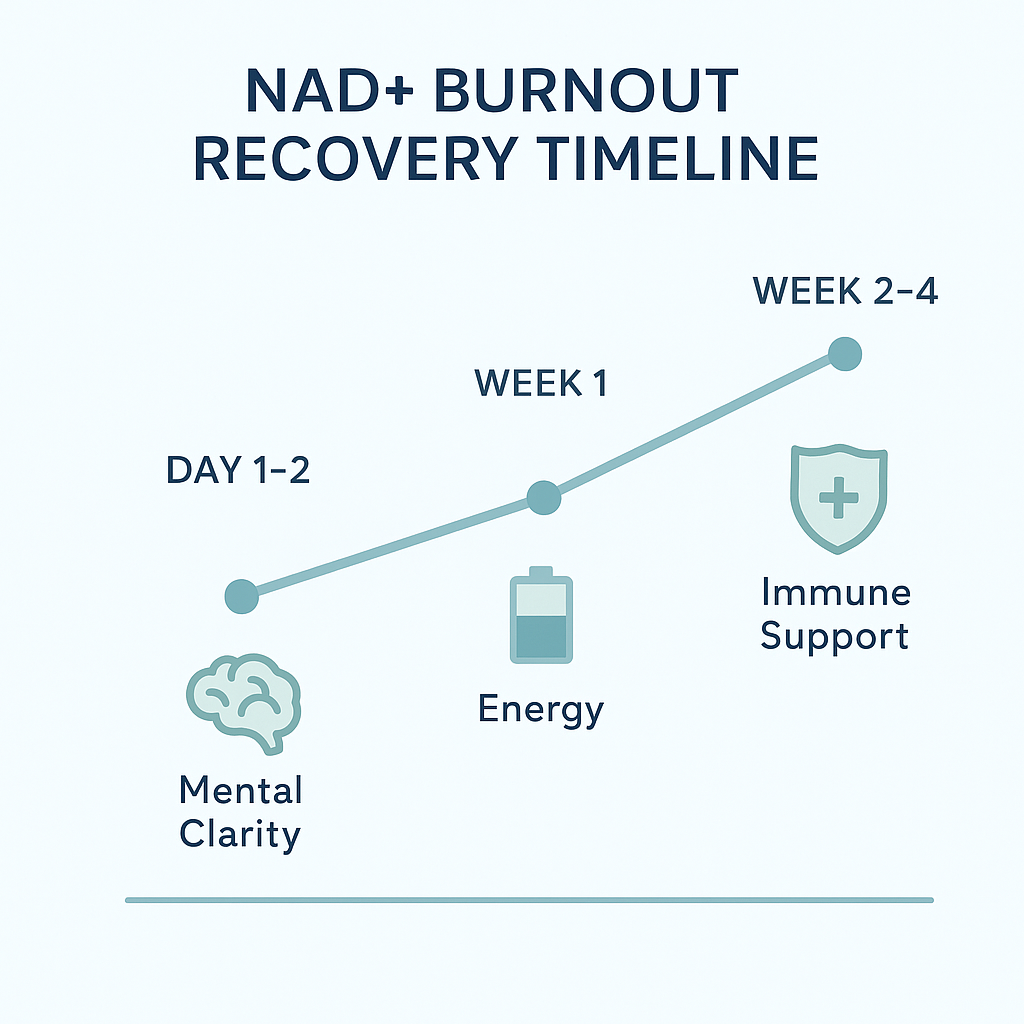
Days 1-2 after your first session: Most people notice increased alertness and improved sleep quality. This isn’t a placebo effect, it’s your cells beginning to function more efficiently with adequate nutrient support.
Week 1: Focus and concentration typically improve as neurotransmitter production stabilizes. The brain fog that makes simple tasks feel overwhelming often begins to lift during this period.
Weeks 2-4: Sustained energy levels become more consistent, and your resilience to daily stressors increases noticeably. You might find that situations that previously felt overwhelming now feel manageable.
Ongoing: Many clients discover that maintaining periodic IV therapy sessions helps prevent future burnout cycles, especially during predictably stressful periods like tax season, school year launches, or family transitions.
Important note: IV therapy works most effectively when combined with other recovery strategies. Consider pairing your treatments with stress management techniques, adaptogenic supplements, and meal planning that supports sustained energy. The goal is to create a comprehensive approach that addresses burnout from multiple angles.
Is IV Therapy Safe for Burnout Recovery?
IV therapy, when administered by licensed medical professionals using pharmaceutical-grade nutrients, has an excellent safety profile for most adults. However, it’s not appropriate for everyone.
You should avoid IV therapy if you have: kidney disease, certain heart conditions, or are currently pregnant or breastfeeding. Always discuss your medical history and current medications with qualified providers before beginning any IV protocol.
Common mild side effects can include temporary soreness at the injection site or a metallic taste during certain infusions. These typically resolve quickly and don’t interfere with daily activities.
The key to safe IV therapy lies in working with providers who use properly compounded nutrients, maintain sterile protocols, and have experience designing protocols for your specific needs.
Burnout Recovery in South Florida’s Unique Environment
Living and working in South Florida creates specific challenges that can intensify burnout and complicate recovery. The year-round heat and humidity place additional demands on your cardiovascular system and increase your body’s need for electrolytes and hydration support.
The region’s tourist-driven economy means many professionals work extended hours during peak seasons, followed by slower periods that don’t always allow for full recovery. This cyclical stress pattern can prevent your cellular systems from fully restoring between busy periods.
Hurricane season adds another layer of stress that affects everything from sleep patterns to work schedules. The combination of weather uncertainty, preparation demands, and potential evacuation stress can trigger burnout even in people who were previously managing well.
The cultural emphasis on year-round activity and outdoor living means many South Florida residents don’t naturally slow down seasonally. While this has many benefits, it can also mean missing the natural rest periods that help prevent burnout accumulation.
IV therapy protocols designed for South Florida living take these factors into account, emphasizing hydration support, electrolyte balance, and nutrients that support heat tolerance and stress resilience.
Frequently Asked Questions
How much does burnout recovery IV therapy cost? The cost varies depending on which nutrients and protocols you choose. NAD+ infusions typically range from $300-600 per session, while B vitamin and hydration support treatments are generally more affordable. Many clients find that investing in 3-4 sessions over a month costs less than the productivity and health impacts of ongoing burnout. We recommend discussing your specific needs during a consultation to create a protocol that fits your budget and goals.
How long does each IV therapy session take? Session length depends on the type of treatment. NAD+ infusions usually take 2-3 hours due to the slower infusion rate needed for comfort and effectiveness. B vitamin boosts and hydration treatments typically take 45-60 minutes. Limitless comprehensive protocols fall somewhere in between at 60-90 minutes. You can use this time to work, read, or simply rest while receiving treatment.
Is IV therapy for burnout covered by insurance? Most insurance plans don’t cover IV therapy for wellness or burnout recovery since it’s considered elective treatment. However, if you have a Health Savings Account (HSA) or Flexible Spending Account (FSA), you may be able to use those funds. We provide detailed receipts that you can submit for reimbursement consideration.
How often should I get IV therapy for burnout recovery? Most effective protocols involve weekly or biweekly sessions for the first month, then maintenance sessions monthly or as needed. Your frequency depends on your burnout severity, lifestyle demands, and how your body responds. Some clients need intensive support initially, while others benefit from spacing treatments further apart once their energy stabilizes.
Can I get IV therapy if I’m taking medications or have health conditions? This depends on your specific medications and health status. We always review your complete medical history before treatment. Generally, IV therapy is safe for healthy adults, but conditions like kidney disease, certain heart problems, or pregnancy require special consideration. Always disclose all medications and supplements you’re taking during consultation.
What’s the difference between IV therapy and taking oral supplements for burnout? Oral supplements have to be digested, absorbed through your gut, and then distributed throughout your body. This process can be inefficient, especially when stress has compromised your digestive function. IV therapy delivers nutrients directly into your bloodstream, ensuring nearly 100% absorption. For burnout recovery, this direct delivery can make a significant difference in how quickly you feel results.
What should I expect during my first burnout recovery IV session? You’ll start with a brief consultation to discuss your symptoms and goals. During treatment, you’ll relax in a comfortable chair while our licensed medical professional inserts a small IV catheter and monitors your session. Most people find the process relaxing and use the time to catch up on reading, work on their laptop, or simply rest. You might notice increased alertness or improved mood within hours of your first session.
Are there any side effects I should know about? Side effects are generally minimal with proper administration. You might experience temporary soreness at the IV site, a metallic taste during certain infusions, or mild fatigue as your body processes the nutrients. Serious adverse reactions are rare when treatment is provided by qualified professionals using pharmaceutical-grade ingredients. We monitor you throughout the session and provide detailed aftercare instructions.
How do I know if IV therapy is right for my type of burnout? IV therapy tends to work best for people experiencing physical symptoms of burnout like persistent fatigue, brain fog, and difficulty recovering from stress. If your burnout is primarily emotional or situational without physical symptoms, therapy or lifestyle changes might be more appropriate primary interventions. During consultation, we help you determine whether IV therapy aligns with your specific symptom pattern and recovery goals.
Can I combine IV therapy with other burnout treatments? Absolutely. IV therapy works well alongside counseling, stress management techniques, sleep optimization, and other wellness interventions. In fact, the most successful burnout recovery plans typically combine multiple approaches. The cellular support from IV therapy can actually make other treatments more effective by improving your energy and mental clarity.
Final Thoughts
Burnout recovery isn’t one-size-fits-all, and it definitely isn’t something you can power through with willpower alone. The most effective approaches address the cellular dysfunction that creates persistent symptoms, not just the surface-level fatigue.
IV therapy isn’t a miracle cure that will instantly reverse months of chronic stress. But when used strategically as part of a comprehensive recovery plan, it can bridge the gap between where you are now and where you want to be. It provides the cellular support your body needs to rebuild its natural resilience and energy production.
Especially in demanding environments like South Florida, where heat, humidity, and high-pressure lifestyles compound stress effects, targeted interventions can make the difference between struggling through each day and actually thriving.
Ready to explore whether IV therapy could support your burnout recovery? Our team specializes in designing personalized protocols that address your specific symptoms and lifestyle demands. Explore our mobile IV services and comprehensive burnout recovery options to learn how targeted cellular support might fit into your recovery plan.